
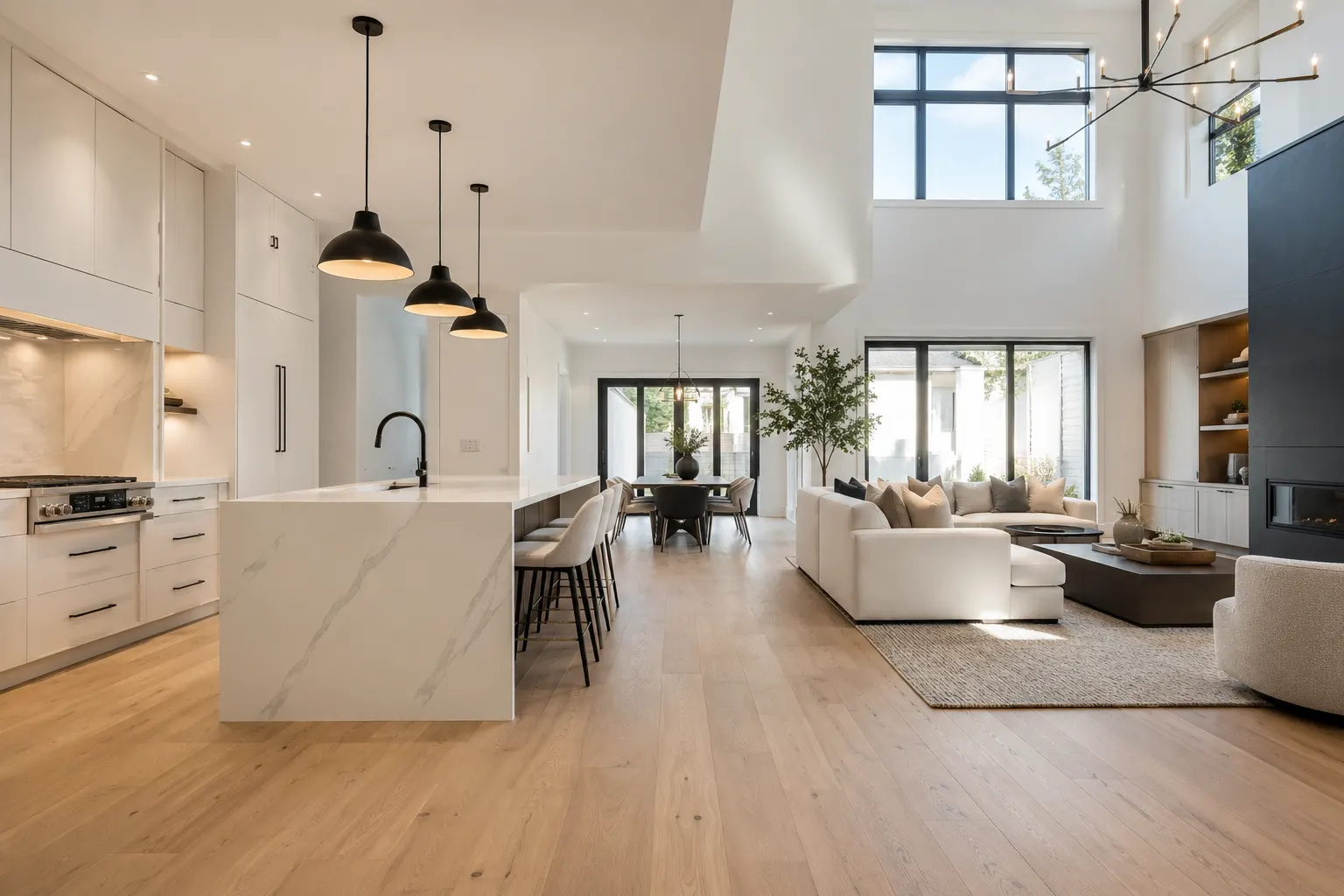
Which Renovations Add the Most Home Value in the GTA?
A GTA renovation ROI guide comparing kitchens, bathrooms, basements, exterior improvements, additions, maintenance, and the limits of percentage claims.
In the GTA, well-planned kitchen and bathroom updates usually add the broadest resale appeal, while finished basements, useful added living space, curb appeal, and corrected maintenance issues can also add value. A 2022 Royal LePage survey estimated potential value increases of 20 percent for kitchens, 16 percent for bathrooms, 15 percent for finished basements, and 10 percent for outdoor space.
By Andare Homes
Last updated: July 24, 2026
Those percentages describe potential home-value change reported by surveyed real estate professionals, not guaranteed recovery of project cost. Actual return depends on neighbourhood price ceilings, starting condition, workmanship, layout, buyer preferences, timing, and whether the renovation solves a real defect.
Value can include function, comfort, safety, accessibility, efficiency, rental utility, or more years in the home. Decide which result matters before using ROI to choose scope.
Which renovations can add the most value?
| Renovation | Royal LePage 2022 potential value increase | Best use |
|---|---|---|
| Kitchen | 20% | Dated or dysfunctional central space |
| Bathroom | 16% | Poor condition, too few baths, weak layout |
| Finished basement or apartment | 15% | Usable legal space and strong access |
| Outdoor entertaining and landscaping | 10% | Curb appeal and functional exterior |
| Maintenance and systems | No universal percentage | Removes buyer objections and risk |
| Addition | Property-specific | Adds scarce, permitted, well-integrated space |
The highest percentage is not always the best project. Water entry, unsafe wiring, or a failing roof may deserve priority over a new kitchen.
How should renovation ROI actually be calculated?
Renovation return on investment compares the estimated increase in property value with the project cost. If a $150,000 renovation contributes an estimated $105,000 to resale value, the simple cost recovery is 70 percent. That does not mean the owner lost $45,000. The calculation omits years of use, avoided repairs, lower operating costs, rental income, and the personal value of a home that works better.
A responsible analysis uses a range rather than one number:
- Estimate the home’s current value using recent, relevant comparable sales.
- Estimate a realistic post-renovation value with the help of a local real estate professional or appraiser.
- Subtract the complete project cost, including design, permits, taxes, temporary living, and contingency.
- Test a conservative, expected, and optimistic resale case.
- Separate financial recovery from non-financial goals such as function, comfort, and long-term use.
Do not apply a national survey percentage directly to the purchase price and call it a forecast. The same kitchen can have different value in a starter bungalow, a luxury infill home, and a property already near the neighbourhood’s price ceiling.
Which renovations tend to have broad GTA buyer appeal?
Kitchens that improve function
Buyers notice the kitchen, but value does not come only from expensive finishes. Better circulation, useful storage, durable cabinetry, task lighting, ventilation, work surface, and an appropriate connection to dining or family space can matter more. Moving every service may cost more without producing a better layout.
Bathrooms that solve a shortage
Adding a practical ensuite, improving the only family bathroom, or creating a main-floor powder room can remove a meaningful objection. Waterproofing, ventilation, drainage, and workmanship influence value because buyers are alert to leaks and rushed tile work.
Finished basements with legal, usable space
A dry basement with adequate ceiling height, safe stairs, light, egress, and documented permits is easier to understand and use. A legal apartment can add utility where zoning, fire safety, services, parking, and market demand align. Low ceilings, moisture, and undocumented bedrooms reduce that benefit.
Added space that fits the property
An addition can add scarce bedrooms, family space, or a primary suite, but the design must preserve light, yard quality, circulation, and neighbourhood fit. Cost recovery varies because structural work, foundations, exterior envelope, and systems make additions expensive. The added area should solve a clear need.
Maintenance and exterior work
Roofing, drainage, waterproofing, structure, electrical, plumbing, windows, and exterior repairs may not produce a dramatic listing photo, but defects in these areas can narrow the buyer pool and create conditions during a sale. Curb appeal works best when the underlying envelope is sound.
What affects renovation return on investment most?
Neighbourhood ceiling
A renovation cannot reliably push a home far beyond comparable properties simply because it cost more.
Starting condition
Replacing a failed kitchen can unlock more value than replacing a recent, functional one with more expensive finishes.
The same logic applies across the house. Buyers may pay more for a home without obvious deferred work, but they will not necessarily reimburse the seller for replacing components that were already new and functional.
Layout and permit status
Useful, legal, well-connected space is easier for buyers and appraisers to value than awkward or undocumented work.
Design coherence
A consistent whole-home design often feels more valuable than one luxury room surrounded by visibly deferred work.
Scope and documentation
Permits, inspection records, drawings, warranties, product information, and invoices help a future buyer understand major work. Documentation does not guarantee a higher price, but undocumented structure, plumbing, electrical, or added living space can create uncertainty.
Time horizon
Near-term sellers should be cautious about highly disruptive work with uncertain recovery. Long-term owners can justify improvements partly through years of use. Trends also change, so durable materials and adaptable layouts usually age better than a narrow style choice.
What do Ontario rules and current data say?
Royal LePage’s national survey of 340 real estate professionals reported average potential home-value increases of 20 percent for kitchens, 16 percent for bathrooms, 15 percent for finished basements, and 10 percent for outdoor entertaining or landscaping. The survey was released in May 2022, so it is best used as evidence of relative buyer appeal, not a 2026 guarantee. Source: Royal LePage national renovation survey, May 5, 2022.
Cost assumptions also need a date. Statistics Canada reported on July 24, 2026 that residential building construction costs across 15 census metropolitan areas rose 0.5 percent in the second quarter and 2.3 percent year over year. Toronto was one of three cities with a quarterly decline, at 0.8 percent, showing why a national headline should not replace a local current estimate. Source: Statistics Canada Building Construction Price Index, second quarter 2026.
How should you plan renovation return on investment?
- Set the value objective. Decide whether the project is for near-term resale, long-term enjoyment, rental utility, accessibility, or a combination.
- Study the local market. Review comparable sales and ask a local real estate professional what buyers expect at the target price.
- Fix defects before cosmetics. Address leaks, structure, electrical, plumbing, roof, drainage, and unpermitted work that can derail a sale.
- Design to the house. Choose durable materials, practical storage, good lighting, and layouts proportional to the property.
- Price the complete scope. Include design, permits, taxes, contingency, temporary living, appliances, landscaping, and connected repairs where applicable.
- Protect documentation. Keep approvals, inspection records, drawings, specifications, warranties, and close-out information together.
An in-house design team can test these priorities as one plan instead of treating each room as an isolated purchase. It can compare a kitchen-only scope with a layout change, coordinate finishes across rooms, and check whether plumbing or structural work should happen once rather than being reopened in a later phase.
What problems should owners watch for?
- Treating value increase as cost recovery: A home value increase and renovation ROI are different calculations.
- Over-personalizing for resale: Highly specific layouts or finishes can narrow the buyer pool.
- Ignoring documentation: Permits, inspection records, drawings, and invoices help buyers understand major work.
- Spending past the neighbourhood: Premium work can improve enjoyment without producing the same increase in market value.
- Renovating around a defect: New finishes over moisture, structure, or outdated services postpone the real problem.
Andare Homes is rated 5.0 stars across 55 Google reviews. Its in-house design team helps owners turn market goals, existing conditions, layout, materials, and construction cost into one coherent renovation scope.
Frequently asked questions
Will I recover 100 percent of renovation cost?
Not necessarily. Enjoyment, avoided maintenance, energy performance, and functionality have value, but resale recovery varies.
Is a kitchen always the best renovation?
It often has broad appeal, but a leaking roof, unsafe wiring, failed drainage, or only bathroom may be the higher priority.
Does a basement apartment add value?
Legal, well-designed income space can add utility and value, but costs, zoning, fire safety, access, parking, and local demand matter.
Do additions have good ROI?
They can when they add scarce bedrooms, bathrooms, or family space without overbuilding the lot or neighbourhood.
Should I renovate right before selling?
Targeted repairs, paint, lighting, and presentation may be more efficient than a major project if the sale is soon.
How do I avoid over-improving?
Use comparable sales, a realistic post-renovation value range, and a design budget aligned with the house and neighbourhood.
Do permits affect renovation value?
They can. Required permits and approved inspections help show that structural, plumbing, electrical, and added living-space work followed an accountable process. A buyer may still complete independent due diligence.
What is the next step?
Andare’s in-house design team can assess kitchen renovations, bathroom renovations, and whole-home renovations as one value plan. Explore whole-home renovations in Toronto or home additions in Vaughan, then call (416) 524-1165.
Book a consultation for your project
Tell us about the space, the scope, and your timeline. Our design team reviews it and replies with the next step.