
Choosing Finishes and Materials for Your Renovation: A Decision Guide
How to choose finishes and materials for a renovation across the GTA: the order to decide in, how to judge durability and maintenance, keeping selections cohesive, and how an in-house design team makes the choices easier.
The reliable way to choose finishes and materials is to decide in the right order, starting with the permanent, hard-to-change surfaces like flooring, cabinetry, and tile, then layering countertops, fixtures, lighting, hardware, and paint on top of those anchors. Judge every material on how it will hold up to daily use and how easy it is to keep clean, not just how it looks in a showroom, and keep the whole palette cohesive so the finished rooms feel like one home rather than a collection of separate decisions. When those choices are made during the design phase with a team that will also build the project, the selections are grounded in what is actually available and what installs well.
Finish selection is where many homeowners feel most overwhelmed, because the number of choices is enormous and every one seems to depend on the others. This guide gives you a clear method for making those decisions with confidence, so your finished home feels intentional and lasts.
Decide in the Right Order
The most common mistake in selections is choosing in the wrong sequence, falling in love with a light fixture or a paint colour first and then trying to build everything else around it. Work from the permanent and hard-to-change surfaces outward.
A dependable order looks like this:
- Flooring, because it runs through the whole home and sets the tone for everything else.
- Cabinetry, which anchors kitchens, bathrooms, and built-ins and is difficult to change later.
- Tile for backsplashes, showers, and floors, chosen to sit comfortably with the cabinetry and flooring.
- Countertops, selected against the cabinets and tile already chosen.
- Plumbing and lighting fixtures, which layer onto the surfaces above.
- Hardware, the handles, pulls, and faucets that tie the metals together.
- Paint, chosen last because it is the easiest thing to match to everything else, not the other way around.
Deciding in this order means each choice narrows the next rather than fighting it. Paint comes in every colour imaginable, so it is the servant of your other selections, never the master.
Judge Materials on Life, Not Just Looks
A showroom sample under perfect lighting tells you almost nothing about how a material lives in a real home. Before you commit, ask how each surface will perform where it actually goes.
- What traffic and wear will it take? Entry and kitchen floors, mudrooms, and family bathrooms take a beating. Choose materials proven to handle it rather than delicate finishes that photograph well and scratch fast.
- How easy is it to clean and maintain? Some surfaces need sealing, careful products, or constant wiping to look their best. Be honest about the upkeep your household will realistically do.
- How does it handle moisture? Bathrooms, basements, and laundry areas demand materials that tolerate humidity and the occasional spill without warping or staining.
- Does it suit the people who live here? A home with young kids, pets, or heavy daily use calls for forgiving, hard-wearing finishes. Matching materials to your real life is what keeps a home looking good years later.
Quality-focused selection is not about chasing the trendiest option. It is about choosing materials that will still look right and function well long after the renovation is done.
Keep the Whole Palette Cohesive
A home feels considered when its finishes speak to each other and jarring when every room was decided in isolation. Cohesion does not mean everything matches. It means everything belongs.
A few principles keep a palette unified:
- Choose a small set of core materials and repeat them. A consistent flooring, a recurring wood tone, and a shared metal finish carry your eye through the home and make it feel whole.
- Limit your metal finishes. Pick one primary metal for faucets, hardware, and lighting, and at most one accent. A home with five competing metals reads as accidental.
- Let one or two materials be the star. A statement tile or a beautiful stone is far more powerful when the surfaces around it are calm. When everything shouts, nothing stands out.
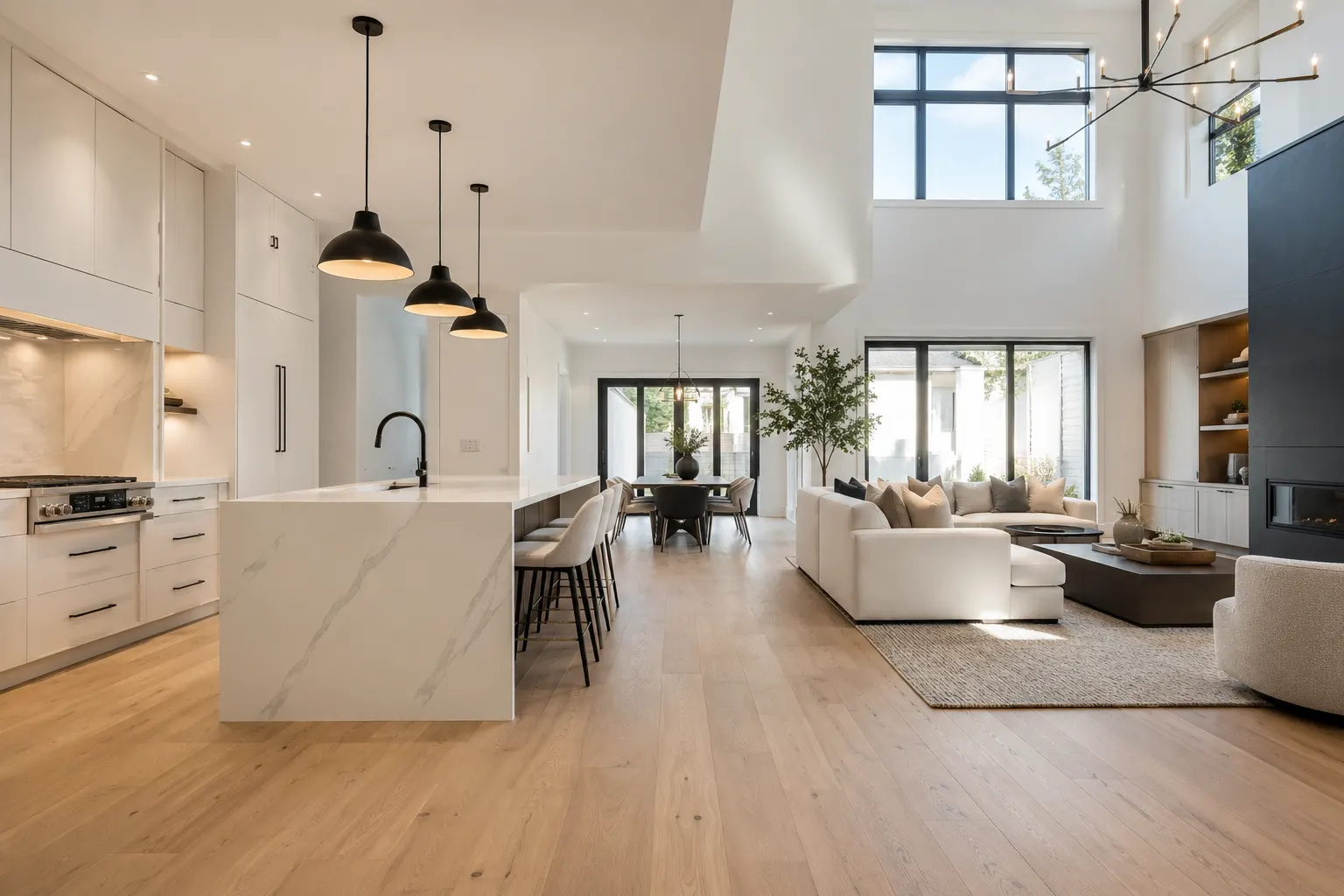
- Consider sightlines. In open-concept spaces, you often see the kitchen, living, and dining areas at once, so their finishes have to work together as one view, not three separate rooms.
See Samples in Your Own Home
Never make a final selection from a small chip or a screen. Colours, textures, and undertones shift dramatically with lighting, and the light in a showroom is nothing like the light in your home.
Bring the largest samples you can into the actual space, and look at them at different times of day. Morning light, afternoon sun, and evening lamps will each pull different tones out of the same material. A tile that looked warm and inviting under showroom halogen can turn grey and cold in a north-facing room. Living with samples for a few days before committing is one of the simplest ways to avoid a regret you have to live with for years.
Balance Durability, Function, and Style
Every good selection sits at the meeting point of three questions: will it last, does it work for how this room is used, and do I love it? A material that fails any one of those is the wrong choice, no matter how strong it is on the others.
- A gorgeous surface that scratches the first week fails on durability.
- A bulletproof material that makes the room feel cold fails on the love test.
- A beautiful, tough finish that is wrong for a wet or high-traffic area fails on function.
The goal is a selection that satisfies all three at once. This is exactly the kind of judgment an experienced design team brings, because they have seen how thousands of materials actually perform once they are living in a home.
How an In-House Design Team Makes This Easier
Facing every one of these decisions alone, in a sea of showrooms and samples, is where selection fatigue sets in and homeowners start second-guessing themselves. An in-house design team changes that experience entirely.
Because the designers work alongside the crews who will install the work, they guide you toward materials that are genuinely available, that suit how each room is used, and that the team knows how to install beautifully. They edit the overwhelming universe of options down to a curated set that fits your home and your life, then keep the whole palette cohesive across every room. And because all of this happens during the design phase, your selections are locked before demolition, which keeps the build on schedule and spares you rushed choices with the clock running.
Andare Homes is a quality-focused design-build company serving homeowners across the GTA. We are rated 5.0 across 55 Google reviews, licensed, insured, and WSIB-covered, with every project built to the Ontario Building Code and backed by our 2-year workmanship warranty. Our in-house design team guides your selections from first idea to final install, whether it is a kitchen, a whole-home renovation, or a custom home. See how our choices come together across our projects.
Frequently Asked Questions
What order should I choose renovation finishes in? Start with the permanent, hard-to-change surfaces and work outward: flooring first, then cabinetry, tile, and countertops, followed by plumbing and lighting fixtures, hardware, and finally paint. Paint comes in every colour, so it is the easiest thing to match to everything else and should be chosen last.
How do I know if a material is durable enough? Match the material to how the space is actually used. High-traffic floors, family bathrooms, and kitchens need hard-wearing, easy-to-clean surfaces, while moisture-prone areas like basements and bathrooms need materials that tolerate humidity. Ask how each finish performs over years of real use, not just how it looks in a showroom.
Do all my finishes need to match? No. The goal is cohesion, not matching. Choose a small set of core materials and repeat them, limit yourself to one primary metal finish plus at most one accent, and let one or two materials be the star while the rest stay calm. That is what makes a home feel considered rather than busy.
Why should I view samples in my own home? Colours and undertones shift dramatically with lighting, and showroom light is nothing like the light in your home. Bring the largest samples you can into the actual room and look at them in morning, afternoon, and evening light before committing, so you are not surprised by how a material reads once it is installed.
Ready to Choose With Confidence?
You do not have to navigate every showroom alone. If you are planning a renovation across the GTA and want a team that guides your finishes toward choices that last, book a consultation with Andare Homes. Our in-house design team will help you build a palette that fits your home, your life, and the way you actually live.
Book a consultation for your project
Tell us about the space, the scope, and your timeline. Our design team reviews it and replies with the next step.